Powdery Mildew on Basil: Causes, Signs, and Prevention
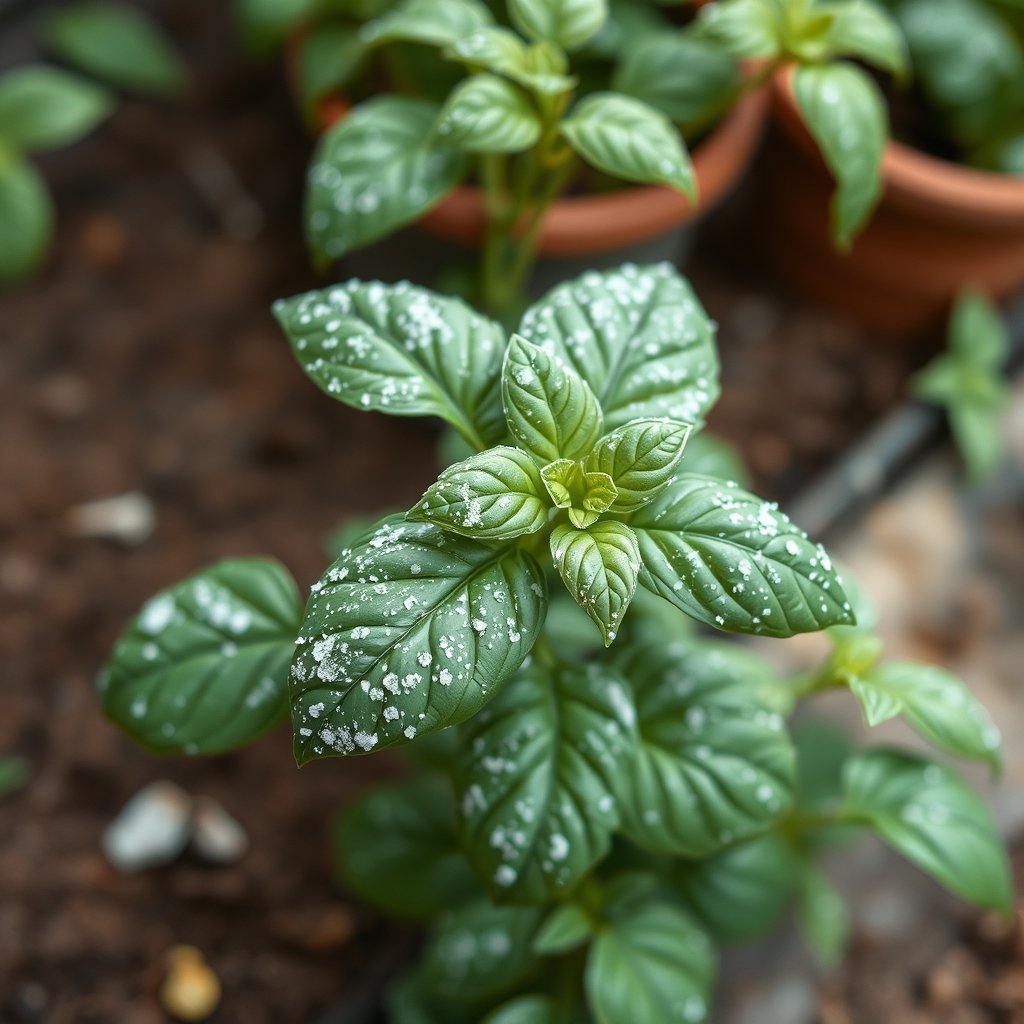
Powdery mildew on basil is one of the most frustrating problems any herb gardener — indoor or outdoor — will face. That ghostly white coating appears almost overnight, and if you don’t act fast, it spreads from leaf to leaf until your once-lush plant looks like it’s been dusted with chalk. The good news? Powdery mildew on basil is very treatable, and with the right approach you can stop it in its tracks, save your plant, and keep it from coming back. This guide covers everything: what it is, why it happens, and exactly what to do about it.
Table of Contents
What Exactly Is Powdery Mildew on Basil?
Powdery mildew on basil is a fungal disease caused primarily by Golovinomyces cichoracearum and related species of the order Erysiphales. Unlike many other fungi, it doesn’t need wet leaves to thrive — in fact, it prefers warm days and cool, humid nights. That’s what makes it so sneaky.
The visible sign of powdery mildew on basil is a white or grayish powdery coating that appears first on the upper surface of older leaves, then spreads to younger growth, stems, and even flower buds. Beneath the powder, the leaf tissue turns yellow and eventually brown as the fungus starves the plant of nutrients.
It’s worth knowing that powdery mildew on basil is host-specific to a degree — the strain attacking your basil is unlikely to jump to your tomatoes, but it will very happily spread to neighboring basil plants. If you grow multiple pots, keep an eye on all of them the moment you spot any signs.
Why Does Powdery Mildew on Basil Happen? The Real Causes
Understanding the causes of powdery mildew on basil is the fastest way to both treat it and prevent it from returning. The fungus spreads via airborne spores, which means it can float in through an open window, hitch a ride on your hands, or arrive on a new plant you brought home from the garden center.
Once spores land on a leaf, they need the right conditions to germinate. Here’s what they love:
- High humidity (above 60–70%) combined with warm temperatures — the classic indoor environment in late summer and early autumn.
- Poor air circulation — leaves packed tightly together or pots crowded on a windowsill create the still air that spores thrive in.
- Overfertilizing with nitrogen — lush, soft new growth is the fungus’s favorite food source.
- Low light — basil grown in dim corners is stressed, and stressed plants are far more vulnerable to powdery mildew on basil than healthy, well-lit ones.
- Overhead watering — splashing water onto leaves isn’t the direct cause, but damp foliage that stays wet encourages fungal colonization.
If you’re growing herbs indoors, it’s worth reading our guide on cómo regar hierbas aromáticas en interior correctamente to make sure your watering habits aren’t contributing to the problem.
How to Identify Powdery Mildew on Basil (vs. Other Issues)
Not every white mark on a basil leaf means powdery mildew on basil. Downy mildew, a different fungal-like disease caused by Peronospora belbahrii, is actually more common on basil than powdery mildew and can look similar at first glance. Knowing the difference matters because the treatments aren’t identical.
| Feature | Powdery Mildew on Basil | Downy Mildew on Basil |
|---|---|---|
| Location of growth | Upper leaf surface (mainly) | Underside of leaves (mainly) |
| Appearance | White, powdery, dry coating | Gray-purple, fuzzy, downy patches |
| Leaf discoloration | Yellow under white patches | Brown/yellow angular spots on top |
| Conditions favored | Warm days, cool/humid nights | Cool, very wet conditions |
| Speed of spread | Moderate to fast | Very fast |
To confirm powdery mildew on basil, look for that characteristic dry, talcum-powder texture on the tops of leaves. If you rub it gently with a finger, it smears. Downy mildew feels softer and is typically on the underside. Also check for water spots from mineral deposits — those won’t smear and appear only where water has dried.
7 Proven Ways to Treat Powdery Mildew on Basil
When you’re dealing with powdery mildew on basil, speed is everything. These seven methods range from simple home remedies to more targeted treatments, ordered from the gentlest to the most assertive. Start with whichever fits the severity of your outbreak.
1. Remove Affected Leaves Immediately
The first step when tackling powdery mildew on basil is physical removal. Pick off any leaf showing white powder and drop it straight into a bin — never compost it, as the spores survive. This reduces the fungal load on your plant instantly and slows the spread while you prepare a treatment.
2. Baking Soda Spray
A baking soda solution is one of the most widely used home remedies for powdery mildew on basil. Mix around 1 teaspoon of baking soda with 1 litre of water and a tiny drop of liquid dish soap (to help it stick). Spray both sides of all leaves, repeating every 5–7 days. The alkaline environment disrupts the fungus’s ability to reproduce.
3. Diluted Neem Oil
Neem oil is a natural fungicide and insecticide that works well against powdery mildew on basil. Dilute it according to the product label — typically around 2–3 ml per litre of water — add a small amount of mild soap as an emulsifier, and spray in the early morning so leaves dry before evening. Neem has a strong smell that dissipates within a day or two.
4. Milk Spray
It sounds unusual, but a diluted milk spray (roughly 1 part milk to 9 parts water) has shown real-world effectiveness against powdery mildew on basil. The proteins in milk act as antiseptics, and the spray also boosts the plant’s natural immune response. Apply in the morning on a day with some airflow so leaves don’t stay wet.
5. Apple Cider Vinegar Solution
Mix 1 tablespoon of apple cider vinegar per litre of water and spray it on affected areas. The acidity changes the pH on the leaf surface, creating a hostile environment for the fungus. Be careful not to overdo it — too much vinegar can burn basil’s delicate leaves. Test on one leaf first if you’re unsure.
6. Improve Air Circulation
No spray will permanently solve powdery mildew on basil if the underlying conditions remain the same. Move your plant to a location with better airflow — near a window that’s opened daily, or with a small fan running on low nearby. Space pots at least 15–20 cm apart so air can move freely between them.
7. Copper-Based Fungicide (Last Resort)
If powdery mildew on basil has taken over and organic remedies aren’t making a dent, a copper-based fungicide — available at most garden centers — can be effective. Follow the label instructions exactly, and don’t harvest leaves for eating until the withholding period stated on the product has passed. This is particularly important because basil is a culinary herb you’ll be consuming.
How to Prevent Powdery Mildew on Basil from Coming Back
Treating an active outbreak is one thing — keeping powdery mildew on basil away for good is another. The best prevention is creating conditions where the fungus simply can’t get a foothold.
Choose resistant varieties. Some basil cultivars have been bred with stronger resistance to fungal disease. ‘Eleonora’, ‘Amazel’, and ‘Rutgers Devotion DMR’ are examples developed with downy mildew resistance, and they tend to hold up better against powdery mildew too. If you’ve had repeated outbreaks, switching varieties is one of the most reliable long-term solutions.
Water at the base, never overhead. Keeping foliage dry reduces the conditions powdery mildew on basil needs to spread. Water directly at the soil level, ideally in the morning so any accidental leaf splashes have all day to evaporate. Consistent watering habits also reduce plant stress — and a stressed basil is always more susceptible.
Don’t over-feed with nitrogen. Lush, fast-growing leaves sound like a good thing, but they’re softer and more appealing to fungal spores. A balanced fertilizer used sparingly is better than heavy nitrogen feeds. If you grow other herbs alongside basil, the same principle applies — you can read more about indoor herb care for perejil en interior and cilantro to keep your whole herb garden healthy.
Inspect new plants before bringing them home. Powdery mildew on basil often enters your home on a plant purchased from a nursery or market. Inspect all new herbs carefully — check both leaf surfaces — and keep them isolated for a week before placing them near your existing plants.
Prune regularly. Keeping your basil plant tidy reduces crowding, opens up the canopy for light and air, and removes the older lower leaves that are usually the first to show powdery mildew on basil. Regular pruning also encourages fresh, strong growth, which is more resistant than old, tired foliage.
If you enjoy growing a range of herbs indoors, it’s worth learning the specific needs of each one — proper growing conditions across your whole herb collection means fewer disease problems overall. Our guides on cómo cultivar romero en interior cover a similarly resilient Mediterranean herb that makes a great companion to basil.
Can You Still Eat Basil Affected by Powdery Mildew?
This is one of the first things people ask when they spot powdery mildew on basil, and it’s a fair concern. Technically, the fungus itself is not toxic to humans, and small amounts of powdery mildew on basil leaves won’t make you ill if accidentally consumed. That said, the honest answer is: we wouldn’t recommend eating leaves that are visibly covered in white powder.
The texture and flavor are noticeably affected — mildewed basil tastes bitter and feels unpleasant. Beyond that, heavily infected leaves have already had their cellular structure compromised, which means reduced aroma and essential oil content — the very things that make basil worth growing in the first place.
The practical approach: remove and discard any leaves with visible powdery mildew on basil, wash remaining healthy leaves thoroughly before use, and treat the plant promptly. Leaves that emerge after a successful treatment are perfectly fine to use in cooking.
If you’ve used a chemical fungicide, always observe the product’s stated pre-harvest interval. With purely organic treatments like baking soda or milk spray, a thorough rinse is all that’s needed before eating the leaves.
Final Thoughts
Powdery mildew on basil is aggravating, but it’s not a death sentence for your plant. Catch it early, act decisively, and adjust the growing conditions so the fungus doesn’t get a second chance. The combination of removing infected leaves, applying an organic spray like baking soda or neem oil, and improving airflow handles the vast majority of cases without any harsh chemicals.
The bigger picture is this: powdery mildew on basil is usually a signal that something in the plant’s environment isn’t quite right — too much humidity, too little light, or poor air circulation. Fix those underlying issues and you’ll find your basil far more resilient season after season. Grow it right, and it’ll reward you with far more fragrant leaves than it ever loses to disease.
Whether you’re growing a single pot on a sunny kitchen windowsill or an entire indoor herb garden, knowing how to identify and respond to powdery mildew on basil quickly is one of the most useful skills you can develop as a home gardener. Keep this guide bookmarked for the next time that telltale white dusting appears — because it probably will, at least once.
Frequently Asked Questions
How quickly does powdery mildew on basil spread?
Powdery mildew on basil can spread from a single leaf to the entire plant within a week under warm, humid, still conditions. This is why early detection and immediate action matter so much. Check your basil plant every few days, especially in late summer and early autumn when conditions are most favorable for the fungus.
Will powdery mildew on basil kill my plant?
Left completely untreated, powdery mildew on basil will progressively weaken the plant by interfering with photosynthesis, eventually leading to leaf drop and plant death. However, most plants treated promptly recover well and continue producing healthy leaves. Catching it at the first sign of white powder gives your basil an excellent chance of full recovery.
Is baking soda spray safe for edible basil?
Yes — a diluted baking soda solution is considered safe for use on edible herbs, including basil. Rinse treated leaves with clean water before consuming them. It’s one of the most widely recommended organic approaches to powdery mildew on basil precisely because it leaves no harmful residue when used at the correct dilution.
Can powdery mildew on basil spread to other herbs?
The specific strain of powdery mildew on basil is host-adapted, meaning it strongly prefers basil over other herb species. It won’t reliably spread to rosemary, thyme, or parsley. However, it will spread readily from one basil plant to another, so isolate any affected plant immediately to protect the rest of your herb collection.
Sources and further reading: University of Minnesota Extension – Powdery Mildew on Plants | Royal Horticultural Society – Powdery Mildews | UC IPM – Basil Downy Mildew