Do Indoor Plants Really Purify Air? What Research Shows
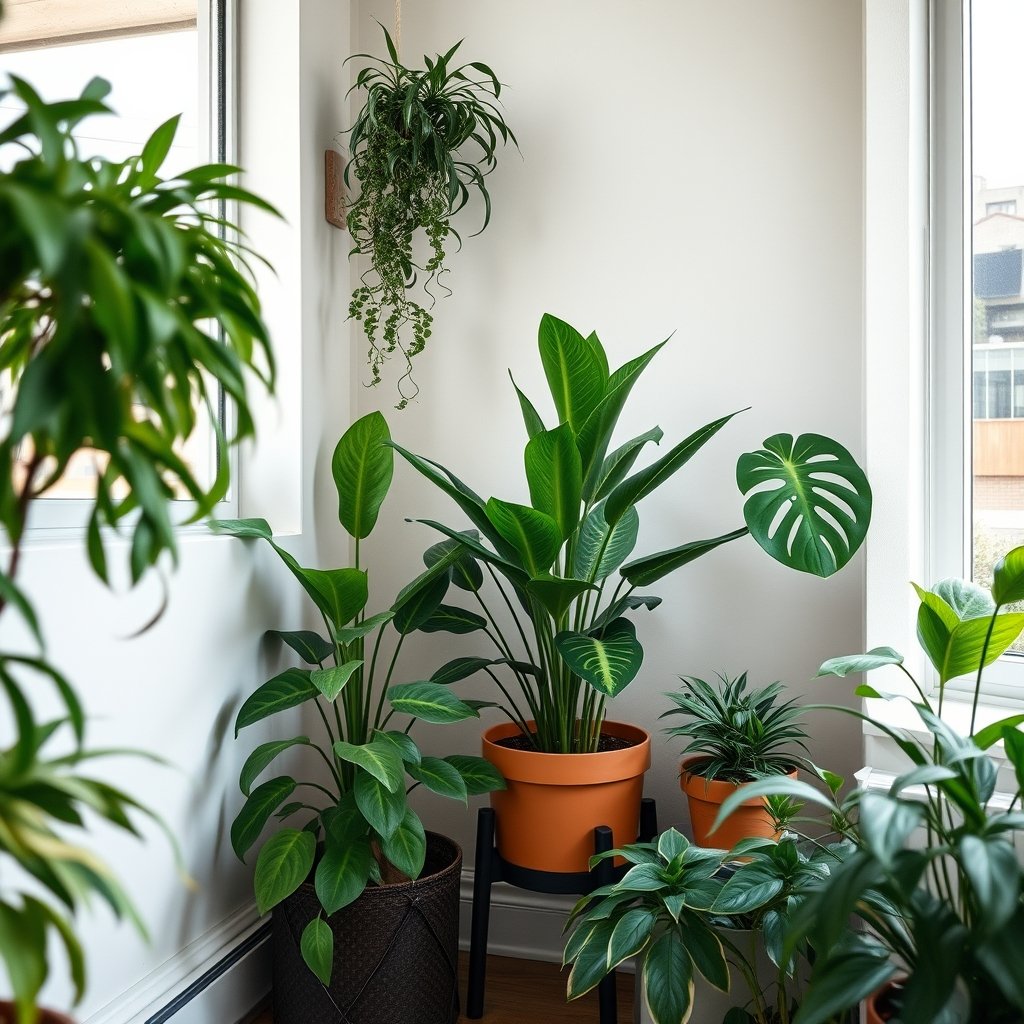
Do indoor plants purify air? It’s one of the most searched questions among houseplant lovers, and the honest answer is: yes — but with important caveats. Plants do remove certain pollutants from the air around them, yet the scale at which they work in a real home is far more modest than popular headlines suggest. In this article we’ll walk through what the science actually says, which pollutants plants target, how many plants you’d realistically need, and which species are worth keeping for air quality reasons.
Key takeaways
- Plants do absorb volatile organic compounds (VOCs) and carbon dioxide, but the effect in a typical room is small without dozens of plants.
- The famous NASA Clean Air Study was conducted in sealed, controlled chambers — not in ordinary living rooms or offices.
- Soil microbes often do as much or more pollutant removal than the leaves themselves.
- Species like pothos, peace lily, and snake plant are consistently cited in research for their absorption rates.
- Plants are a valuable addition to a healthy home, but they work best alongside good ventilation — not as a replacement for it.
Table of Contents
What Does ‘Air Purification’ Actually Mean for a Plant?
When people ask do indoor plants purify air, they’re usually thinking about two things: removing harmful gases and reducing dust or allergens. Plants interact with air primarily through their leaves and roots. Leaves absorb gases through tiny pores called stomata, while root-zone microbes break down organic pollutants in the soil. This process is called phytoremediation, and it’s well-documented in both laboratory and field settings.
The gases most commonly studied include volatile organic compounds (VOCs) such as benzene, formaldehyde, trichloroethylene, and xylene. These compounds off-gas from furniture, cleaning products, paints, and synthetic carpets — all common in modern homes. Carbon dioxide is another concern, especially in poorly ventilated rooms. So yes, do indoor plants purify air of these gases? To a measurable degree, they do — it just depends on how many plants you have and how well-ventilated the space is.
The NASA Study: What It Really Found
The most-cited piece of evidence when people ask do indoor plants purify air is the NASA Clean Air Study from 1989, led by researcher Bill Wolverton. The study tested a range of houseplants in sealed, 0.07 cubic metre Plexiglas chambers and measured their ability to remove specific VOCs over a 24-hour period. The results were genuinely impressive in that controlled setting.
But here’s the catch: a typical bedroom is around 30–50 cubic metres — hundreds of times larger than those test chambers. A 2019 meta-analysis published in the Journal of Exposure Science & Environmental Epidemiology concluded that you would need somewhere between 10 and 1,000 plants per square metre of floor space to match the air-cleaning effect of simply opening a window. That’s not a reason to throw out your houseplants — it’s a reason to understand what they can and can’t do.
Still, the question of do indoor plants purify air in real homes has been revisited many times since 1989, and researchers consistently find measurable — if modest — reductions in VOC concentrations where plants are present. The effect is real; it’s the scale that gets overstated.
Do Indoor Plants Purify Air of Specific Pollutants?
Different species target different compounds with varying efficiency. When you’re asking do indoor plants purify air in your specific home, it helps to know which pollutants you’re most exposed to. Here’s a practical comparison of commonly studied species and the pollutants they handle best:
| Plant | Best at removing | Light needs | Ease of care |
|---|---|---|---|
| Pothos (Epipremnum aureum) | Formaldehyde, benzene, CO₂ | Low to medium | Very easy |
| Peace Lily (Spathiphyllum) | Ammonia, benzene, trichloroethylene | Low | Easy |
| Snake Plant (Dracaena trifasciata) | Formaldehyde, xylene, nitrogen oxides | Low to bright indirect | Very easy |
| Spider Plant (Chlorophytum comosum) | Formaldehyde, carbon monoxide | Medium to bright indirect | Easy |
| Rubber Plant (Ficus elastica) | Formaldehyde, airborne bacteria | Bright indirect | Moderate |
| Boston Fern (Nephrolepis exaltata) | Formaldehyde, xylene | Medium, high humidity | Moderate |
| Aloe Vera | Benzene, formaldehyde | Bright direct or indirect | Easy |
The table above shows that do indoor plants purify air of multiple pollutant types — but no single plant handles everything. A mix of species is more effective than a collection of one type. Pothos and snake plants are especially popular picks because they survive in low light, need infrequent watering, and have solid research backing their absorption rates.
The Role of Soil Microbes — Often Overlooked
A surprising finding from recent research is that the soil and root zone of a potted plant may be responsible for more pollutant removal than the leaves. When researchers asked do indoor plants purify air through leaves alone, they found that a bare pot of moist potting mix still absorbed measurable quantities of VOCs. The microbial communities living around the roots break down organic compounds, converting them into forms the plant can use as nutrients.
This has practical implications. Keeping your potting mix aerated and slightly moist — not waterlogged, not bone dry — supports those microbial populations. Repotting every year or two with fresh, quality potting mix also keeps the microbial ecosystem active. It’s one of the less glamorous answers to do indoor plants purify air, but the soil matters just as much as the species you choose.
Some newer product lines sell “biofilter” plant systems that deliberately push room air through the root zone using a small fan. These active systems have shown notably higher pollutant-removal rates than passive potted plants in early studies, suggesting that if you’re serious about air quality, root-zone exposure is the lever to pull.
How Many Plants Do You Actually Need?
This is the question most people really want answered when they ask do indoor plants purify air: how many do I need to make a noticeable difference? Researchers at the National Institutes of Health and several university horticulture departments have studied this, and the general consensus is that one plant per 9–10 square metres of floor space provides a modest but measurable benefit under normal ventilation conditions.
A more aggressive target — one plant per 4–5 square metres — is sometimes cited as the point where you’d start to see meaningful VOC reductions without relying on the plants being in sealed chambers. For a 25 square metre living room, that would mean 5–6 plants of mixed species. That’s very achievable, and it’s a reasonable goal for anyone who genuinely cares about whether do indoor plants purify air in their specific space.
Keep in mind that ventilation rate is the dominant variable. A room that exchanges air with the outside several times per hour will naturally dilute pollutants faster than plants can remove them. Where plants shine is in tightly sealed, well-insulated modern buildings — the kind of spaces where VOC concentrations can build up because there’s very little natural air exchange.
Do Indoor Plants Purify Air Enough to Affect Your Health?
This is where the evidence gets genuinely nuanced. Several studies have linked the presence of indoor plants to reported improvements in mood, reduced stress, and lower levels of fatigue in office environments. But is that because do indoor plants purify air to a health-relevant degree, or is it because people simply feel better around greenery — a psychological benefit sometimes called the biophilia effect?
Honestly, it’s probably both. A well-documented 2015 study from the University of Exeter found that employees in offices with plants reported a 15% increase in productivity and wellbeing. That study didn’t isolate air quality as the cause, but it points to a real, measurable benefit from indoor plants regardless of mechanism. The air-purification angle may be just one part of a broader story.
For people with allergies, a note of caution: some flowering houseplants release pollen, and moist potting mix can harbour mould spores that may worsen respiratory symptoms. So when asking do indoor plants purify air for allergy sufferers, the answer is: it depends on the species. Stick to low-pollen, non-flowering plants like pothos, snake plant, or ZZ plant if you’re sensitive.
Practical Steps to Maximise What Your Plants Can Do
If you want to get the most out of plants when it comes to whether do indoor plants purify air in your home, there are a few simple habits that make a real difference. These aren’t magic fixes — they’re sensible practices backed by what we know about plant biology and indoor air chemistry.
- Choose the right species for your light levels. A plant that’s stressed from low light will have fewer open stomata and absorb less gas. Match the species to the conditions it thrives in.
- Keep leaves dust-free. A thick layer of dust on leaves physically blocks stomata. Wipe large leaves monthly with a damp cloth.
- Water correctly. Consistently moist (not soggy) soil keeps root-zone microbes active — the real workhorses when do indoor plants purify air of VOCs.
- Avoid excessive fertiliser. Heavy fertiliser application can disrupt soil microbial communities. Use a balanced, diluted feed during growing season.
- Group plants together. Clusters of plants create a micro-environment with higher humidity and more active gas exchange than isolated pots.
- Ventilate strategically. Open windows when outdoor air quality is good to flush out accumulated VOCs, then let your plants handle the residual load when windows are closed.
- Repot annually. Fresh potting mix renews the microbial ecosystem, maintaining the absorption capacity that makes do indoor plants purify air a practical reality rather than just theory.
Following these seven steps won’t turn your living room into a sterile clean room, but they will ensure that do indoor plants purify air to the maximum extent their biology allows. That’s a worthwhile goal.
Frequently Asked Questions
Do indoor plants purify air as well as an air purifier?
No — a HEPA air purifier processes air at a much higher rate than even a large collection of houseplants can achieve passively. Do indoor plants purify air? Yes, but at a slower, gentler pace. Plants and air purifiers work well together: the purifier handles particulates and rapid VOC spikes while the plants provide continuous, low-level absorption and the wellbeing benefits of greenery.
Is the NASA Clean Air Study still relevant?
The study is still worth reading as foundational research, but its findings apply to sealed chambers, not open rooms. Do indoor plants purify air under real-world conditions? Yes, but at a fraction of the efficiency the study measured. Think of the NASA results as a ceiling — the maximum possible effect — rather than what you’ll experience in your home.
Which single plant is best if I can only have one?
Pothos is a strong all-rounder: it tolerates low light, requires minimal care, and has consistent research support for absorbing formaldehyde and benzene. If you want to start testing whether do indoor plants purify air in your space, a large, healthy pothos in a well-lit spot near a pollution source is a practical first choice.
Can indoor plants make air quality worse?
In certain situations, yes. Overwatered plants can grow mould in the soil, releasing spores into the air. Some flowering species release pollen. And plants in very low light may photosynthesise so little that they add negligible benefit. Do indoor plants purify air if they’re unhealthy or stressed? Not effectively — which is why care quality matters as much as species selection.
Final Thoughts
So, do indoor plants purify air? The straightforward answer is yes — plants absorb VOCs, carbon dioxide, and some other pollutants through their leaves and root zones. The nuanced answer is that the effect is real but modest in a typical home, and it works best when plants are healthy, well-placed, and numerous enough to matter. Do indoor plants purify air as effectively as opening a window or running a HEPA purifier? Not quite. But they offer something those devices don’t: a living, growing presence that supports mood, reduces stress, and contributes quietly to a healthier indoor environment every single day. Keep your plants thriving, choose species suited to your conditions, and let them do their quiet, steady work alongside good ventilation habits.