7 Herbs That Grow Well Indoors Without Direct Sunlight
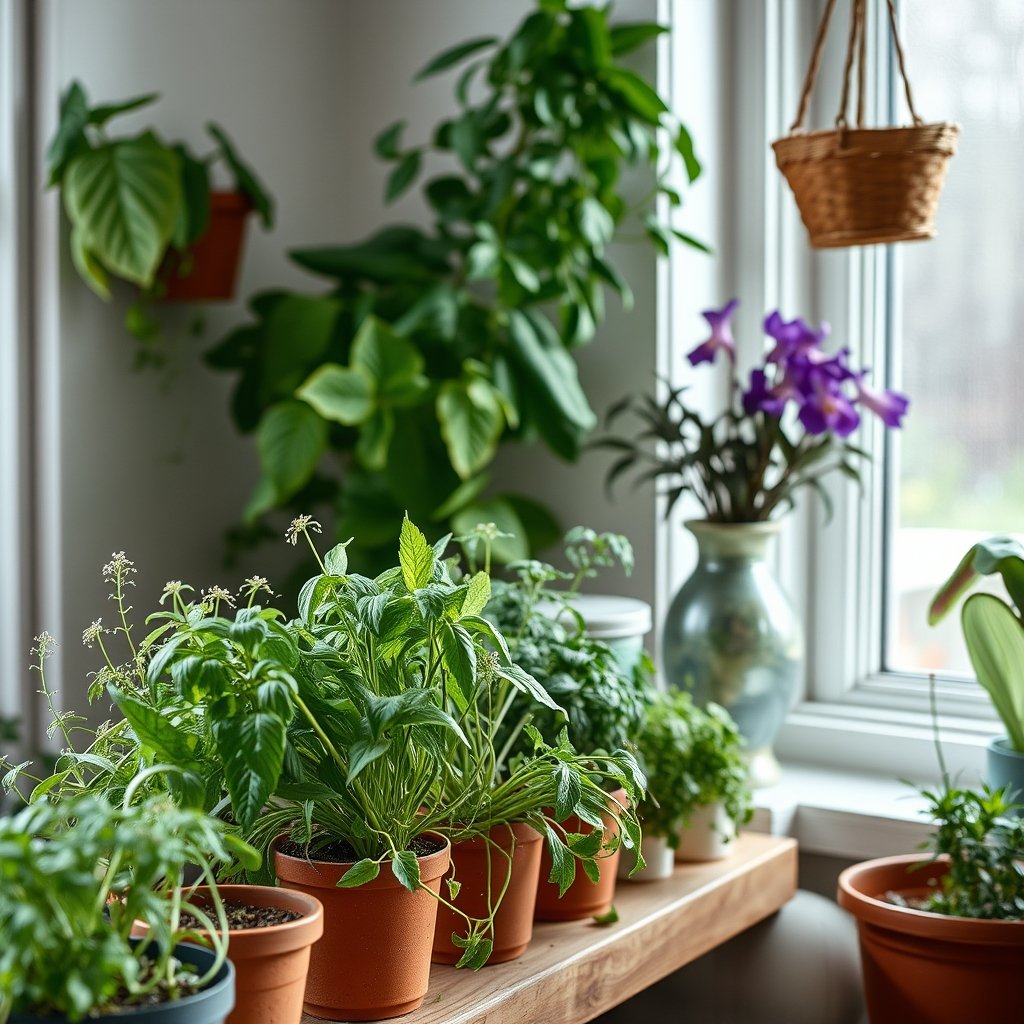
Herbs that grow indoors without sun are a genuine solution for anyone stuck with a north-facing kitchen, a windowless bathroom shelf, or a dimly lit apartment. Most people assume that growing fresh herbs at home requires a bright, south-facing window — but that’s simply not true. A surprising number of culinary and aromatic herbs handle low light remarkably well. In this guide, we’ll walk you through the nine best varieties, explain exactly what “low light” means for plants, share care tips, and help you avoid the most common mistakes beginners make.
Key takeaways
- Several popular culinary herbs — including mint, chives, and parsley — thrive in low or indirect light.
- “Low light” for herbs means roughly 2–4 hours of indirect or artificial light per day, not complete darkness.
- Grow lights are an affordable way to supplement natural light and make almost any spot viable.
- Soil drainage and watering habits matter more than light level for herbs in dim conditions.
- Choosing the right container size prevents root rot, the number-one killer of indoor herbs.
Table of Contents
What “Growing Without Sun” Actually Means for Herbs
When we talk about herbs that grow indoors without sun, we don’t mean complete darkness — no plant can survive without some form of light energy. What we really mean is that these herbs tolerate low or indirect light: the kind you’d find a metre or two away from a window, in a room lit by north-facing glass, or under standard LED ceiling lights.
Botanists generally categorise indoor light into three bands. “Bright indirect” means close to a window but out of direct sun rays. “Medium light” means a well-lit room where you could comfortably read a book. “Low light” means a corner or hallway that feels dim to human eyes. The herbs listed in this guide are comfortable in the medium-to-low range, and most will push into genuine low light with the help of a simple grow lamp.
Understanding this distinction matters because it sets realistic expectations. You won’t get the explosive, bushy growth that a sun-soaked herb garden produces — but you will get steady, harvestable, genuinely useful plants. For a city dweller with limited window space, that’s a meaningful win.
The 9 Best Herbs That Grow Indoors Without Sun
These nine varieties are the most reliable herbs that grow indoors without sun based on their documented shade tolerance, culinary usefulness, and ease of care for beginners. Each one has genuine strengths and a few quirks worth knowing.
| Herb | Minimum Light Need | Best Use | Difficulty |
|---|---|---|---|
| Mint | 2–3 hrs indirect | Teas, cocktails, desserts | Easy |
| Chives | 3–4 hrs indirect | Salads, eggs, soups | Easy |
| Parsley | 3–4 hrs indirect | Sauces, garnish | Easy |
| Lemon Balm | 2–3 hrs indirect | Teas, salads | Easy |
| Chervil | 2–3 hrs indirect | French cooking, salads | Easy |
| Vietnamese Coriander | 3 hrs indirect | Asian dishes, salads | Moderate |
| Tarragon | 3–4 hrs indirect | Sauces, chicken dishes | Moderate |
| Oregano | 3–4 hrs indirect | Pizza, pasta, grilling | Easy |
| Lovage | 2–3 hrs indirect | Soups, stocks | Moderate |
1. Mint
Mint is arguably the poster child for herbs that grow indoors without sun. It naturally grows along stream banks and forest edges in partial shade, so dim indoor conditions feel almost familiar to it. Spearmint and peppermint both work well. Keep it in a pot by itself — mint spreads aggressively and will crowd out anything planted alongside it.
2. Chives
Chives are among the most forgiving herbs that grow indoors without sun. Their grass-like blades can tolerate a north-facing windowsill with ease. Snip them to about 2 cm from the base and they’ll regrow within a week or two. They add a mild onion flavour to scrambled eggs, baked potatoes, and cream cheese.
3. Parsley
Flat-leaf (Italian) parsley handles lower light better than curly parsley, though both qualify as herbs that grow indoors without sun when placed near a modest light source. Parsley is slow to germinate — expect two to three weeks — but once established it’s a reliable producer. It’s biennial, so expect it to bolt in its second year.
4. Lemon Balm
A member of the mint family, lemon balm brings a citrusy fragrance to any room and is one of the easiest herbs that grow indoors without sun. It’s used in calming herbal teas and pairs beautifully with fruit salads. Like mint, it grows vigorously — don’t let it dry out completely between waterings.
5. Chervil
Chervil is underrated in English-speaking kitchens but beloved in French cuisine. It’s one of the four classic fines herbes alongside parsley, tarragon, and chives. Chervil actually prefers shade over direct sun, making it one of the most naturally suited herbs that grow indoors without sun. Its delicate, anise-like flavour wilts with heat, so keep it away from radiators.
6. Vietnamese Coriander
If you love coriander (cilantro) but struggle to keep it alive — you’re not alone, it bolts at the first sign of heat — Vietnamese coriander is a fantastic alternative. It has a similar flavour profile and is genuinely one of the herbs that grow indoors without sun, tolerating medium-low light well. It prefers consistently moist soil.
7. Tarragon
French tarragon (not Russian tarragon, which is far blander) is a go-to for classic béarnaise sauce and roast chicken dishes. It’s one of those herbs that grow indoors without sun as long as you give it a few hours of indirect light and don’t overwater it. Buy it as a cutting or plant rather than growing from seed — true French tarragon rarely sets viable seed.
8. Oregano
Oregano is more tolerant of low light than its Mediterranean origin might suggest. It dries well on the stem, so any excess growth can be bundled and hung to dry rather than wasted. As herbs that grow indoors without sun go, oregano is particularly forgiving of occasional neglect — it handles a missed watering far better than mint does.
9. Lovage
Lovage is a tall, celery-flavoured herb that’s wonderful in soups and homemade stocks. It’s not as common as the others on this list, but it’s genuinely one of the herbs that grow indoors without sun, thriving in partial shade. The main challenge is space — lovage can reach 60 cm or more indoors, so give it a large pot and a corner with decent headroom.
How to Set Up the Perfect Low-Light Indoor Herb Garden
Getting the setup right from the start saves a lot of frustration later. Here’s a practical step-by-step approach to growing herbs that grow indoors without sun successfully.
- Choose the right containers. Use pots with drainage holes — no exceptions. Terracotta pots dry out faster than plastic, which is actually an advantage in low-light conditions where the soil stays moist longer due to slower evaporation.
- Use a quality potting mix. Don’t use garden soil indoors. A peat-free, multipurpose compost mixed with a small amount of perlite (roughly 80:20) gives good drainage while retaining enough moisture for herbs.
- Position thoughtfully. Even the best herbs that grow indoors without sun benefit from being near the brightest available spot. A metre from a north-facing window beats the centre of a dark room.
- Consider a grow light. A basic full-spectrum LED grow light set to run 12–14 hours per day can transform a dim corner into a productive herb station. You don’t need an expensive horticultural setup — modest clip-on panels designed for houseplants work well for herbs.
- Water carefully. In low light, plants photosynthesize more slowly and use water more slowly. Stick your finger 2 cm into the soil before watering — if it’s still damp, wait another day or two.
- Feed lightly. A diluted liquid fertiliser (half the recommended dose) every three to four weeks during the growing season is sufficient. Over-fertilising herbs produces lush but flavourless leaves.
- Harvest regularly. Cutting herbs frequently encourages bushy, compact growth. For herbs that grow indoors without sun, regular harvesting is especially important because leggy, stretched growth is a sign the plant is reaching for light it isn’t finding.
Common Mistakes to Avoid With Indoor Low-Light Herbs
Even the most forgiving herbs that grow indoors without sun can struggle if a few key mistakes are made consistently. These are the ones we see most often.
Overwatering. This is the single biggest killer of potted herbs, and the risk is amplified in low-light conditions. Because the plant is photosynthesising slowly, it takes up water slowly — meaning the soil stays wet for longer, and root rot sets in fast. Always check moisture before you water.
Cramming multiple herbs into one pot. It looks charming in photographs, but herbs have very different water and nutrient needs. Mint, for example, loves moisture, while tarragon prefers to dry out slightly between waterings. Combining them in one container means someone’s always unhappy.
Ignoring temperature. Most culinary herbs prefer temperatures between 15°C and 22°C. Cold windowsills in winter can stress plants even when light levels are acceptable. A folded piece of cork sheeting under the pot acts as insulation and makes a noticeable difference.
Never harvesting. Some beginners are reluctant to cut their herbs, afraid of harming the plant. In reality, the opposite is true. Regular harvesting keeps herbs compact and productive — especially relevant for herbs that grow indoors without sun, where unchecked leggy growth becomes a real problem.
Using Artificial Light to Expand Your Options
Grow lights genuinely change what’s possible when it comes to herbs that grow indoors without sun. A full-spectrum LED panel mimics the wavelengths plants use for photosynthesis, essentially replicating daylight indoors. This doesn’t just keep low-light herbs alive — it allows you to grow moderately sun-hungry herbs like basil in spots that would otherwise be too dark.
The key specifications to look for in a grow light for herbs are colour temperature (around 4000–6500K, the “cool white” or “daylight” range), wattage relative to coverage area, and whether it emits both red and blue spectrum light. Many budget-friendly panels sold for houseplants cover these bases adequately for a small herb collection.
Set the light on a timer so your herbs receive 12–14 hours of light per day, and position it 20–40 cm above the plants. Too close and you risk scorching; too far and the light intensity drops off too steeply to be useful. The University of Maryland Extension’s guide on growing herbs indoors offers solid science-backed advice on light requirements for common herb species.
With a grow light in place, even a windowless bathroom or a basement kitchen can support a productive collection of herbs that grow indoors without sun. It’s one of the most practical upgrades an indoor gardener can make.
Herbs That Grow Indoors Without Sun: Harvesting and Using Your Crop
One of the great pleasures of growing herbs that grow indoors without sun is having a constant, accessible supply of fresh flavour, regardless of the season. But to keep that supply coming, harvesting technique matters.
Always cut herbs in the morning if possible, when their essential oil content — the source of flavour and fragrance — is at its peak before the heat of the day dissipates it. Use sharp scissors rather than tearing stems by hand, which can introduce disease at the wound site.
For leafy herbs like mint, lemon balm, and parsley, cut stems back to just above a leaf node (the point where a leaf meets the stem). This encourages two new shoots to grow from that point, doubling the branch count over time and producing a bushy, full plant.
For chives, cut the entire bunch to about 2–3 cm above soil level. It looks drastic, but chives regrow reliably from the base. For tarragon and oregano, take no more than a third of the plant at one time to avoid stressing it.
Fresh herbs from your indoor garden can also be preserved easily. Mint, parsley, and chives freeze well — chop them and freeze in ice cube trays with a little water. Oregano and tarragon are better dried: bundle stems loosely and hang them upside down in a warm, dry spot for a week or two. For more detail on herb preservation techniques, the National Center for Home Food Preservation at the University of Georgia provides reliable, tested guidance.
Frequently Asked Questions
Can herbs that grow indoors without sun survive in a room with no windows at all?
In a truly windowless room, herbs need artificial light to survive — no plant can photosynthesize in absolute darkness. The good news is that a basic full-spectrum LED grow light on a 12–14 hour timer can substitute for natural light effectively. Many herbs that grow indoors without sun, including mint and chives, do very well under grow lights alone.
Why are my low-light indoor herbs going leggy and pale?
Legginess — long, thin stems with widely spaced leaves — is a classic sign of light stress. The plant is stretching toward a light source it can’t quite reach. Move the pot closer to a window, add a grow light, or reduce the distance between the bulb and the plant. Pale yellowing can also indicate overwatering or nutrient deficiency, so check your watering habits at the same time.
How often should I water herbs that grow indoors without sun?
There’s no universal schedule — it depends on pot size, room temperature, and the specific herb. As a reliable rule, push your finger about 2 cm into the soil before every watering. If it still feels damp, wait. In low-light conditions, herbs photosynthesize and transpire more slowly, so they need water less frequently than their outdoor counterparts.
Is basil one of the herbs that grow indoors without sun?
Basil is not well suited to genuinely low-light conditions — it needs at least 6 hours of bright light to stay healthy and flavourful. It’s one of the more sun-hungry culinary herbs. If you love basil and only have dim conditions, a grow light is your best option; without one, it will survive briefly but quickly turn pale, weak, and prone to disease.
Final Thoughts
Herbs that grow indoors without sun are a practical, rewarding choice for anyone who doesn’t have the luxury of a bright, sunny windowsill. Mint, chives, parsley, lemon balm, chervil, Vietnamese coriander, tarragon, oregano, and lovage all handle low or indirect light with grace — provided you get the watering right and harvest them regularly. A simple grow light opens up even more possibilities if your space is particularly dim. Start with one or two varieties, get confident with them, then expand your collection. Fresh herbs on demand, grown from a shadowy corner of your home, is a small but genuinely satisfying thing.