How to Plant Basil Seeds in Pots for Indoor Growing
When you decide to plant basil seeds indoors, you’re making one of the smartest moves any home cook or garden enthusiast can make. Fresh basil tastes incomparably better than the dried stuff in a jar, and growing it yourself means you control what goes on it — no pesticides, no mystery. Whether you live in a studio apartment or a house with a big garden, you can plant basil seeds indoors year-round and keep a steady supply of fragrant leaves just steps from your kitchen. This guide walks you through every stage, from choosing the right seeds to harvesting your first pinch of leaves.
Table of Contents
What You’ll Need
- Basil seeds — Genovese, Thai, or Lemon basil are all reliable choices for indoor growing
- Seed-starting trays or small pots — 3–4 inch cells work well for individual seedlings
- Seed-starting mix — a lightweight, well-draining mix, not standard potting soil
- A spray bottle — for gentle, even watering without disturbing tiny seeds
- Clear plastic dome or plastic wrap — to trap humidity during germination
- A sunny windowsill or grow light — south- or west-facing windows are ideal
- Liquid fertilizer — a balanced, diluted formula for once seedlings establish
- Labels and a marker — especially useful if you’re starting multiple varieties
Step 1: Choose the Right Basil Variety
Before you plant basil seeds indoors, spend a moment thinking about what you actually want to cook. Genovese basil is the classic choice — broad, cupped leaves, intensely sweet aroma, perfect for pesto and Caprese salad. Thai basil holds up better to heat and carries a mild anise flavour that shines in stir-fries. Lemon basil adds a citrus twist that pairs beautifully with fish or iced tea. If you’re new to indoor herb growing, Genovese is forgiving and fast.
Buy seeds from a reputable seed supplier rather than a big-box garden centre. Seed packs from specialist herb suppliers tend to have better germination rates and clearer sowing instructions. Check the packet date — seeds older than two or three years may germinate poorly, so always go fresh.
Step 2: Pick the Perfect Container
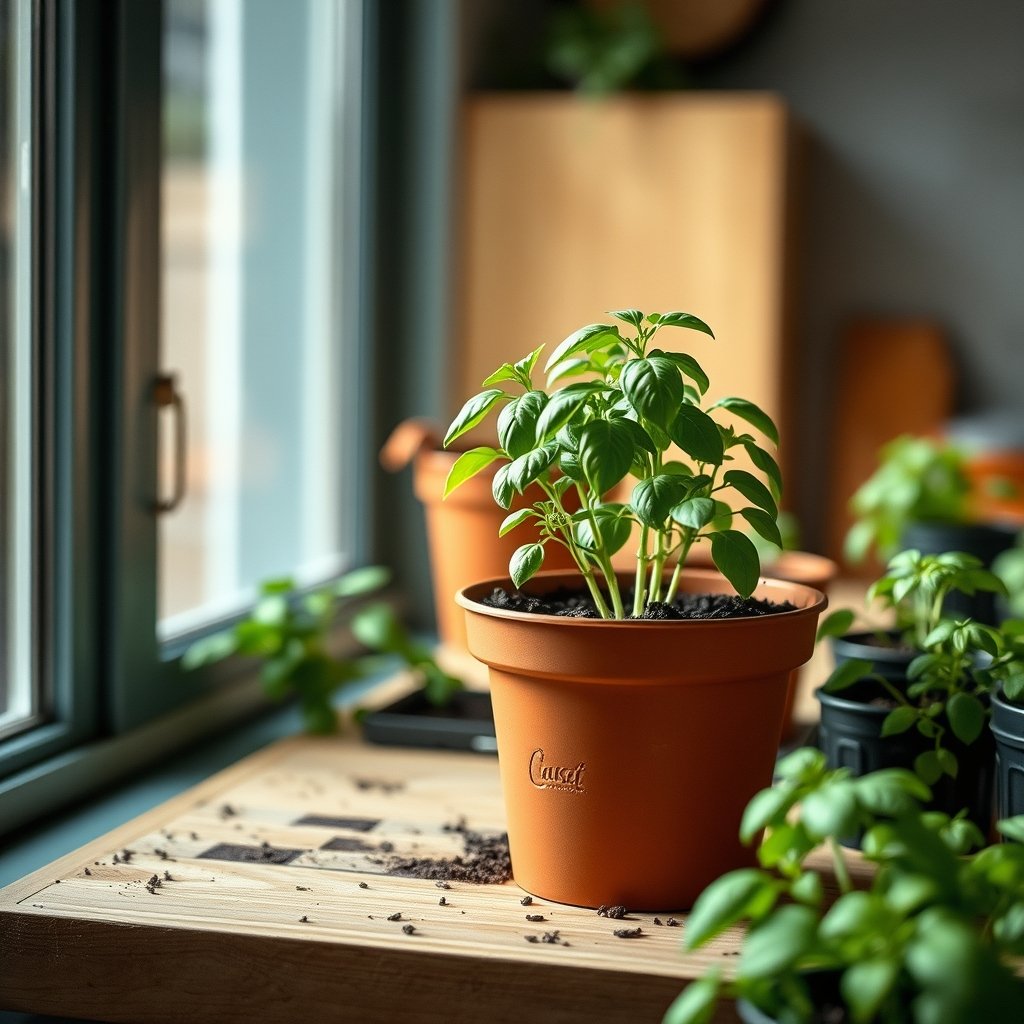
To plant basil seeds indoors successfully, container choice matters more than most beginners realise. Basil seedlings hate sitting in waterlogged soil, so drainage holes are non-negotiable. A standard seed-starting tray with individual cells is ideal for starting multiple plants at once. If you’d rather go straight to a single pot, a 4-inch terracotta or plastic pot works fine — just make sure there’s a saucer underneath to catch drips.
Avoid using old garden soil or heavy potting mixes. They compact easily in small containers, which starves roots of the oxygen they need. A purpose-made seed-starting mix is light, sterile, and holds just enough moisture to keep germination steady without drowning the seeds.
Step 3: Prepare Your Seed-Starting Mix
One of the quieter secrets to plant basil seeds indoors with confidence is getting your growing medium right before a single seed goes in. Pour your seed-starting mix into a large bowl and add water gradually, mixing as you go, until it feels like a wrung-out sponge — damp throughout but not dripping. Pre-moistening the mix means you won’t have to pour water over freshly sown seeds, which can shift them around or push them too deep.
Fill your containers to about half an inch below the rim. Gently firm the surface with your fingertips — not hard packing, just enough to remove large air pockets. A smooth, even surface gives each seed consistent contact with the soil, which improves germination rates noticeably.
Step 4: Sow the Seeds Correctly
Now comes the satisfying part. When you plant basil seeds indoors, the most common mistake is sowing too deep. Basil seeds need light to germinate, so they should sit at or just barely below the soil surface — no more than a quarter of an inch deep. Place two or three seeds per cell if you’re using a tray, or scatter five or six seeds across a small pot. You’ll thin them later.
After placing the seeds, use your spray bottle to mist the surface gently. Then lay a thin sprinkle — barely a pinch — of dry seed-starting mix over the top, just enough to make faint contact without burying them. Follow that with one more light mist from the spray bottle.
According to the University of Maryland Extension, basil germinates best between 70°F and 85°F (21°C–29°C). If your home is on the cooler side, germination may take longer or be patchy.
Step 5: Create the Right Germination Environment
Warmth and humidity are the two things that make or break germination when you plant basil seeds indoors. Cover your tray or pot with a clear plastic dome or a loose sheet of plastic wrap to trap moisture. This mini-greenhouse effect keeps humidity high around the seeds so the surface doesn’t dry out between waterings.
Place the covered tray on top of a refrigerator, near a radiator, or on a heat mat set to around 75°F (24°C). You don’t need light yet — germination happens underground. Check daily and mist the surface if it looks at all dry. Most basil seeds sprout within five to ten days under warm conditions.
The moment you see the first tiny green shoots pushing through, remove the plastic cover immediately. Leaving it on after germination encourages damping off, a fungal condition that can collapse seedlings at the base almost overnight.
Step 6: Provide Enough Light
Light is arguably the biggest challenge when you plant basil seeds indoors. Basil is a sun-loving Mediterranean herb — it wants a minimum of six hours of direct or very bright indirect light every day. A south-facing windowsill in a northern hemisphere home is your best bet. West-facing windows can work if afternoon sun is strong.
If natural light is limited, a grow light changes everything. A full-spectrum LED grow light positioned 2–4 inches above the seedlings for 14–16 hours per day will produce compact, stocky plants rather than the pale, leggy seedlings you get from insufficient light. You can find simple clip-on grow lights that are inexpensive and effective for a small tray of herbs.
Rotate your pots every couple of days if you’re using a windowsill. Basil leans aggressively toward light, and rotating keeps the plant growing upright and evenly. The Royal Horticultural Society recommends this simple trick as one of the most effective ways to keep indoor herb plants shapely.
When you plant basil seeds indoors under a grow light, keep the light on a timer. Consistency matters — basil appreciates a reliable rhythm of light and darkness just like any other living thing.
Step 7: Water, Feed, and Thin Your Seedlings
Once you plant basil seeds indoors and the seedlings have their first true leaves (the second set, which look distinctly basil-like rather than the round seed leaves), it’s time to establish a proper care routine.
Watering: Water at the base of the plant rather than overhead whenever possible. Allow the top half-inch of soil to dry out between waterings. Basil wilts dramatically when thirsty — it’ll tell you — but it also rots quickly if kept permanently wet. A consistent, moderate watering schedule beats both extremes.
Feeding: Start fertilising two to three weeks after germination. Use a balanced liquid fertiliser diluted to half the recommended strength — something like a 10-10-10 formula applied every two weeks. Over-fertilising causes fast but weak growth and can reduce the essential oils that give basil its flavour.
Thinning: If you planted multiple seeds per cell, thin to one plant per cell once seedlings are about two inches tall. Snip the extras at soil level with scissors rather than pulling — pulling disturbs the roots of the seedling you want to keep. It feels wasteful, but crowded seedlings compete for resources and rarely thrive. The Gardeners’ World guide on growing basil reinforces that thinning is one step beginners consistently skip — and consistently regret.
Step 8: Harvest the Right Way to Keep Plants Producing
Here’s where many first-timers go wrong. When you plant basil seeds indoors and finally have a lush plant, it’s tempting to just snip individual leaves from the bottom. Don’t. Always harvest from the top, cutting just above a leaf node (the spot where two leaves meet the stem). This encourages the plant to branch out rather than grow tall and spindly.
Once your basil plant reaches six to eight inches tall, you can begin harvesting regularly. Never remove more than a third of the plant at one time — taking too much weakens it. Pinch off any flower buds as soon as they appear. Once basil flowers and sets seed, it shifts energy away from leaf production and the leaves become bitter and smaller. Consistent pinching keeps the plant in a productive vegetative state for months.
If you plant basil seeds indoors in successive batches — starting a new tray every four to six weeks — you’ll have a continuous supply rather than a glut followed by nothing. Succession sowing is one of the most practical habits any indoor herb grower can develop.
Common Mistakes to Avoid
- Planting too deep: Basil seeds need light contact with the soil surface. Burying them more than a quarter inch deep almost guarantees poor germination.
- Overwatering: Consistently soggy soil kills basil faster than underwatering. Let the surface dry slightly between sessions.
- Too little light: Leggy, pale seedlings are always a sign of insufficient light. Move to a brighter spot or add a grow light before giving up on a batch.
- Leaving the humidity dome on too long: Remove it the moment germination begins. Damping off sets in fast in a closed, humid environment.
- Skipping thinning: Crowded seedlings produce weaker plants. Be ruthless and thin early.
- Letting the plant flower: Flower buds should be pinched off as soon as they appear. A flowering basil plant is on its way out of productive leaf growth.
- Using heavy potting mix: Standard potting soil is too dense for seedlings. Always use a light, purpose-made seed-starting mix when you plant basil seeds indoors.
- Ignoring temperature: Basil is a warm-weather herb. Temperatures below 50°F (10°C) — including cold windowsill drafts in winter — will stunt or kill young plants.
Final Thoughts
Once you plant basil seeds indoors the right way, it genuinely becomes one of the most rewarding things you can grow at home. The smell alone when you brush past a healthy plant is worth every careful watering. The steps here aren’t complicated — they just require consistency and a little patience during those first ten days of germination.
If you’re building out your home workspace or productivity setup alongside your indoor garden hobby, you might find our guide to the best standing desks for small spaces useful — a compact standing desk near a bright window makes a surprisingly good spot to tend to your herbs while you work. And if you’re keeping track of watering schedules, seedling batches, or harvest logs, tools like those covered in our Notion review can help you stay organised without any fuss.
Every time you plant basil seeds indoors, you get a little faster and a little more confident. Start one tray this week. You’ll wonder why you didn’t do it sooner.
Frequently Asked Questions
How long does it take to plant basil seeds indoors and see germination?
Under warm conditions — around 75°F (24°C) — basil seeds typically germinate within five to ten days. Cooler temperatures slow this down significantly, sometimes to two weeks or more. Using a heat mat or placing the tray on top of a warm appliance speeds things up noticeably.
Can I plant basil seeds indoors in any season?
Yes — that’s one of the biggest advantages of growing indoors. You can plant basil seeds indoors at any time of year as long as you can provide warmth and adequate light. In winter, a grow light is almost essential since natural light hours are short and window light is weaker.
Why are my basil seedlings falling over after sprouting?
This is almost certainly damping off, a fungal condition triggered by excess moisture and poor airflow. Remove the humidity dome immediately once seedlings emerge, reduce watering slightly, and improve air circulation with a small fan. Starting fresh with sterile seed-starting mix is the best prevention next time.
How many basil plants do I actually need indoors?
For regular cooking use, three to five mature plants gives you a reliable harvest without overwhelming your windowsill. If you plan to make pesto or dry large quantities, aim for eight to ten plants across successive sowings. When you plant basil seeds indoors in batches every four to six weeks, you avoid the feast-or-famine cycle that frustrates many beginners.